All Things Renewable
All Things Renewable is a podcast from the International Renewable Energy Agency (IRENA) that tracks the global shift toward sustainable energy. Through expert interviews and insights from IRENA's research, it breaks down how renewables are transforming economies, powering communities, and driving sustainable development. Each episode covers key topics such as financing, costs, policies, technological innovations, and the socio-economic impacts of the energy transition.
Episodes
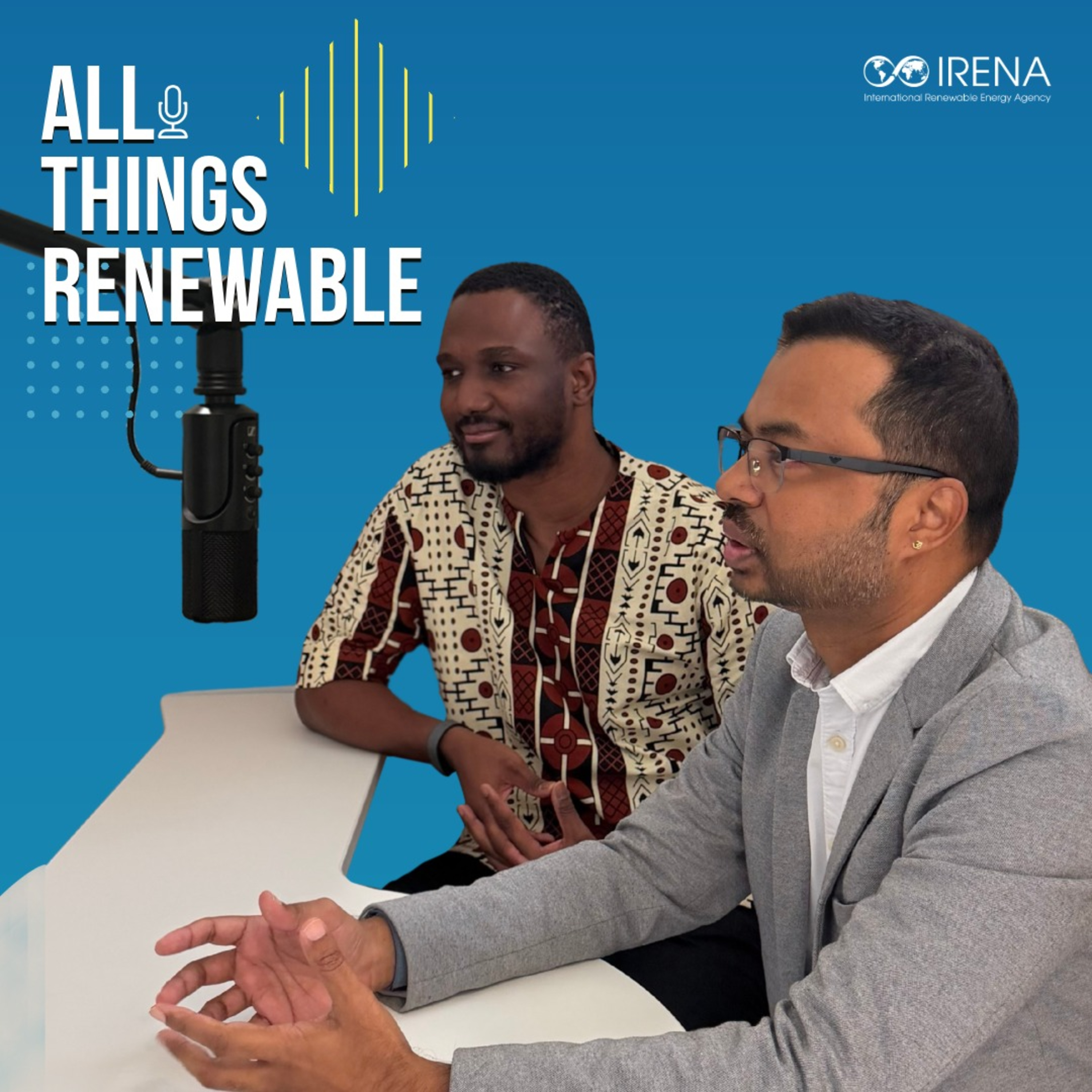
Transition Pathways: How Can Sub-Saharan Africa Turn Vast Renewable Potential into Reliable Energy?
Sub-Saharan Africa holds some of the world's largest renewable energy potential, yet around 560 million people in the region still live without access to electricity. In this episode, Kamlesh Dookayka and Mamadou Goundiam, IRENA experts on Sub-Saharan Africa, explore how the region can move beyond untapped potential to deploy its vast resource base at scale. They examine the structural barrier
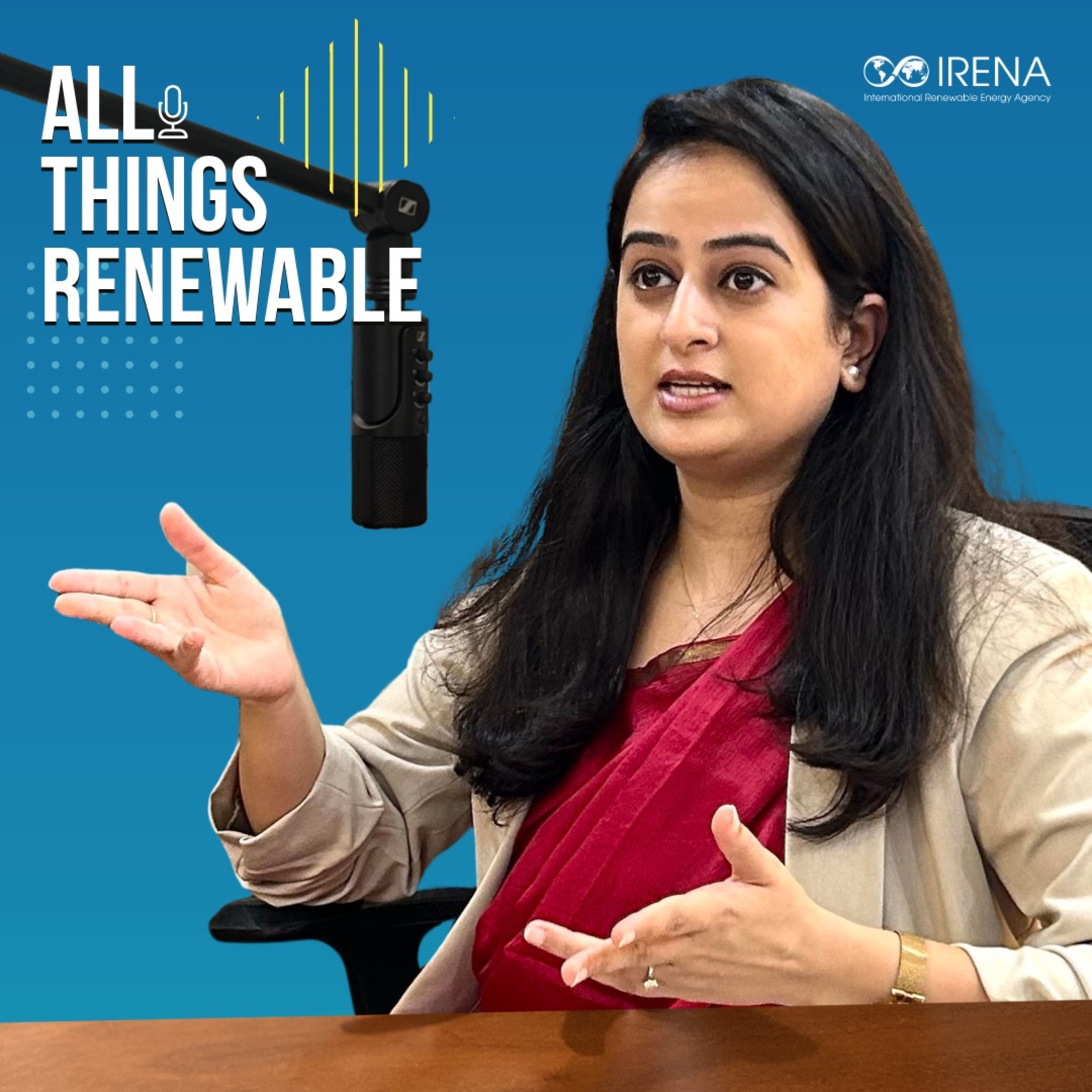
How is Southeast Asia charting its own pathways to a renewable future?
Each country charts its own energy transition pathway. Across Southeast Asia, countries are balancing rising energy demand, import dependence and climate commitments, and renewables are emerging as a reliable solution. Karanpreet Kaur, Country Engagement Officer for Asia, explains how local circumstances shape each nation's approach. She explores how governments turn strengths into opportuniti
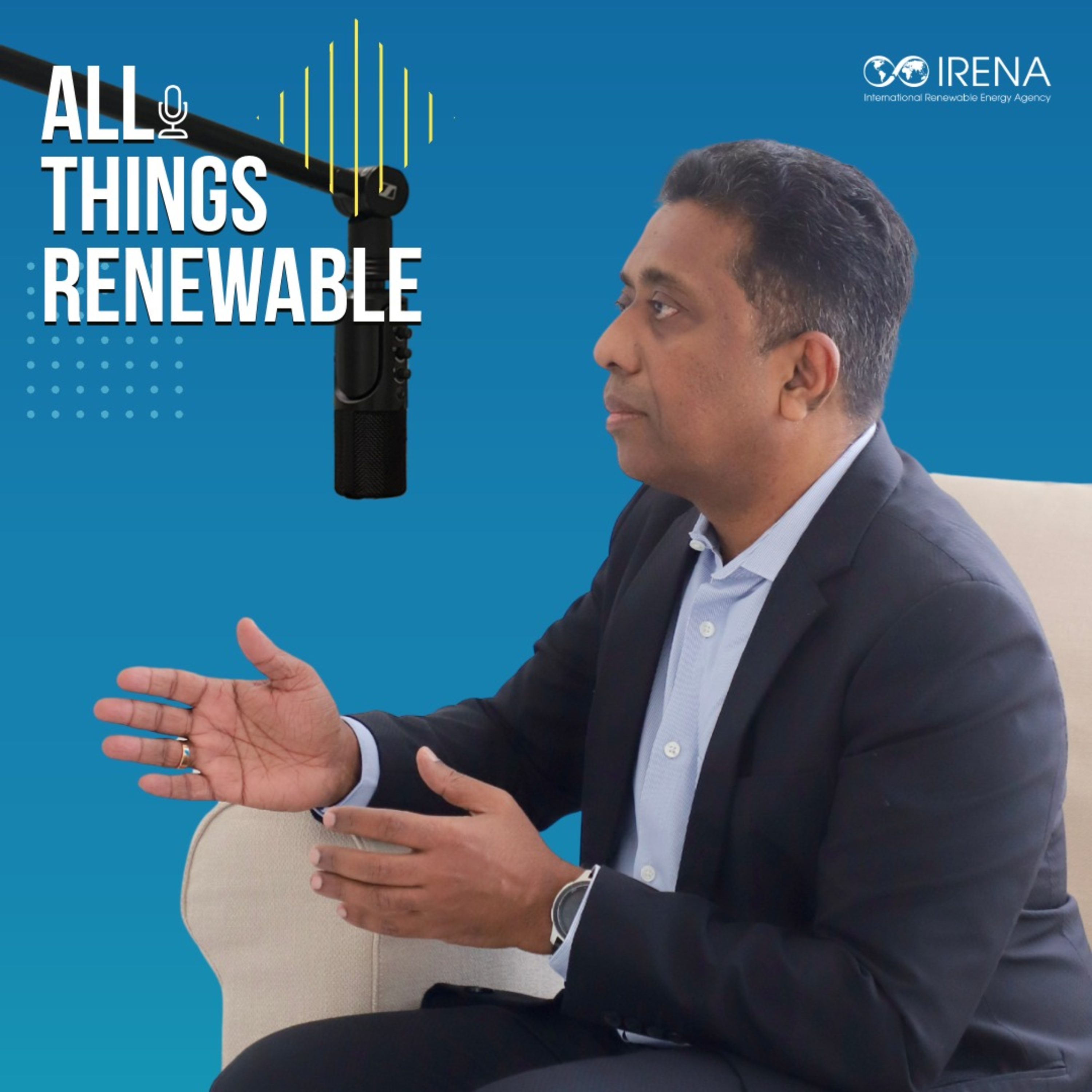
Local Pathways, Global Energy Transition: Turning Local Strengths into Global Progress
No two countries follow the same energy transition pathway, yet renewable energy is emerging as a common solution across them all. In this episode, Binu Parthan, Deputy Director, Country Engagement and Partnerships (CEP), explains why local circumstances such as geography, resources and economic development shape each nation's approach to the energy transition. He explores how countries turn l
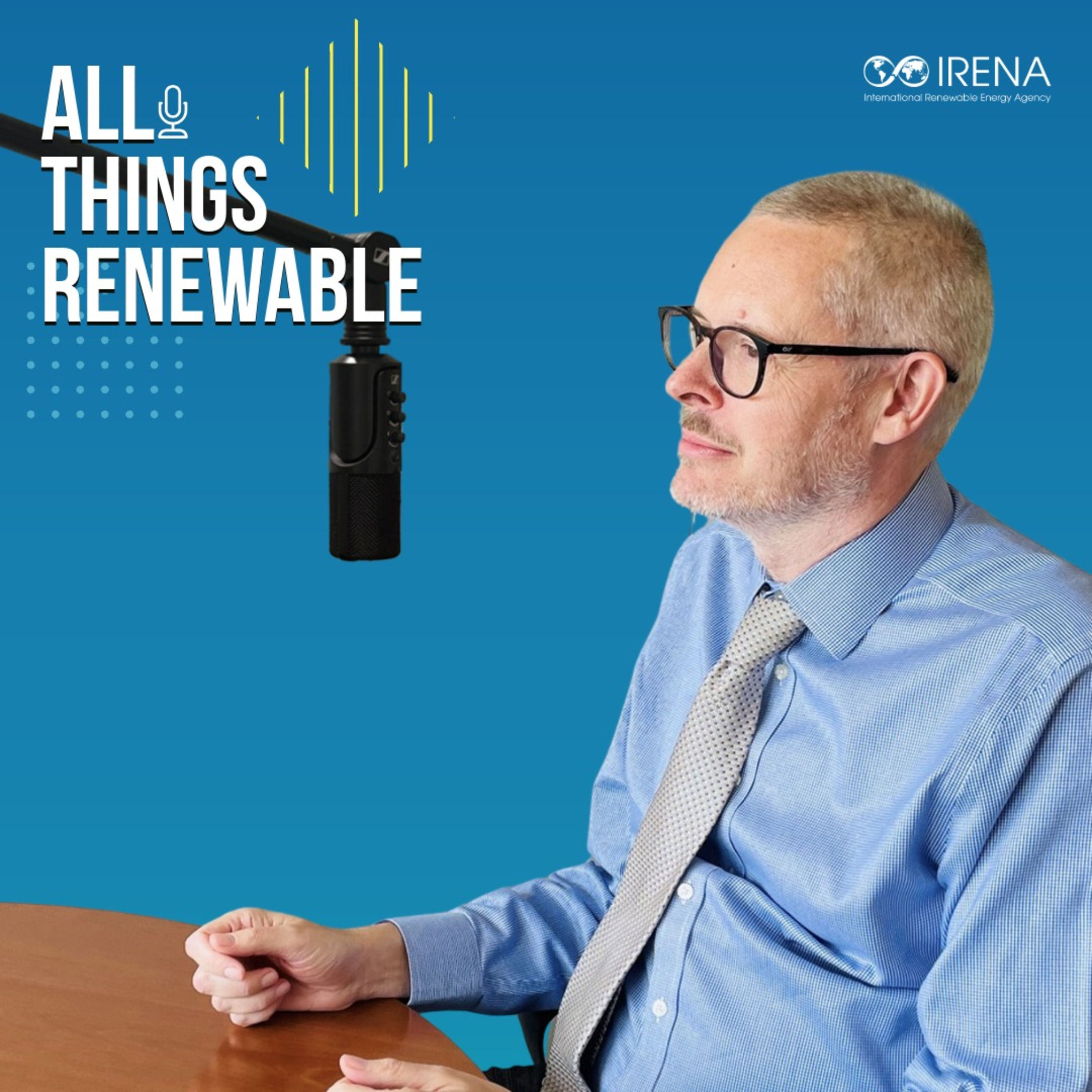
Capacity and Generation: Unveiling the Story Told by the Numbers
In 2025, the world added a record 693 gigawatts of renewable power capacity, alongside record growth in renewable electricity generation. But what do these numbers really tell us? In this episode, Julian Prime, Head of Statistics at IRENA, unpacks the concepts of capacity and generation with examples. He also explains how the numbers translate into a story of progress towards a sustainable energy
Electrification: Powering the Next Phase of the Energy Transition
As geopolitical tensions rise, energy demand grows and fossil fuel markets grow volatile, the global energy transition is entering a new phase, with electrification and renewable power emerging as the foundation of future energy systems. In this episode, Ricardo Gorini, Head of IRENA's Energy and Socioeconomic Outlooks Unit, draws on IRENA’s new report Transitioning Away from Fossil Fuels: A
Driving the Energy Transition: Patent Trends in Heavy-Duty Road Transport
Trucks and buses keep the global economy moving, yet 94% still run on fossil fuels and the sector accounts for around 40% of road transport emissions. In this episode, Dr Lakshmi Supriya, Patent Analytics Officer at WIPO, and Jaidev Dhavle, Associate Programme Officer at IRENA, draw on the new joint WIPO–IRENA Patent Landscape Report: Decarbonizing Heavy-Duty Road Transport to examine what patent
Investing in People: Education and Skills for the Energy Transition
The energy transition cannot succeed without the people to deliver it. Yet as deployment accelerates, a growing skills gap threatens to slow progress. With 40% of the world's population under 25, the opportunity to build that workforce has never been greater. In this episode, Samah Elsayed, Programme Officer leading IRENA's work on education, discusses the skills the transition demands and
From Energy Crisis to Energy Security: Why Supply Chains Matter?
The Middle East conflict has severely disrupted the global economy and exposed the fragility of fossil fuel supply chains. From fuel shortages to supply chain shocks, energy security is being redefined. Countries that invested early in renewables are proving more resilient, showing that security is less about securing fuels and more about ensuring access to technologies, materials and industrial k
How Can Clean Cooking Transform the Lives of 2.1 billion people?
The energy transition is incomplete without addressing how people cook their meals. For over 2.1 billion people worldwide, that still means relying on polluting fuels such as wood, charcoal, and kerosene, which pose serious health risks, particularly for women and children. Yet access to cleaner solutions is one of the most immediate and transformative steps available. Caroline Ochieng, Programme
Beyond the Price: How Well-Designed Renewable Energy Auctions Drive Positive Impacts
Renewable energy auctions have become one of the most widely used policy mechanisms for procuring renewable electricity worldwide. In this episode, Diala Hawila, Team Lead on Renewable Energy Policy and Finance, and Hannah Sofia Guinto, Associate Programme Officer at IRENA, explore how auction design has shifted beyond achieving the lowest possible price to support grid integration, sustainable de
Fuelling Aviation: How to Unlock Investment to Scale Up SAF
Aviation accounts for 2.5% of global emissions and remains one of the hardest sectors to decarbonise. Sustainable aviation fuels (SAF) are widely seen as its most immediate solution, yet production sits below 1% of global jet fuel use. In this episode, Haliru Audu, Programme Officer for Project Financing at IRENA, explores what is holding SAF back from scale, what it takes to attract serious inves
How Can Energy Planning Close the Gap Between Plans and Projects?
As the global energy transition accelerates, countries face growing pressure to turn renewable energy targets into bankable project pipelines. In this episode, Juan Jose Garcia Mendez, Programme Officer for Clean Energy Transition Scenarios at IRENA, discusses how energy planning is evolving into a dynamic tool for coordinating investment, managing risk and aligning energy systems with development
Renewable Energy Jobs: Progress, Trends and Future outlook
Despite record renewable energy deployment in 2024, job creation in the sector grew by just 2.3%, the smallest increase in years. In this episode, Michael Renner, Head of Socioeconomics and Policy at IRENA, and Olga Strietska-Ilina, Head of Future Skills Unit at the International Labour Organizatition (ILO), unpack the findings of the latest IRENA-ILO report, Renewable energy and jobs: Annual revi
Gender Perspective: How to Make the Energy Transition Truly Gender Equitable?
Women make up just 32% of the global renewable energy workforce and hold only 19% of senior leadership positions. In this episode, IRENA's expert explores the barriers behind these figures and what it takes to move beyond token inclusion towards meaningful participation. The discussion highlights the role of indigenous women in advancing socio-economic benefits of decentralised renewables, and out
Financing the Renewable Future: What do the Latest Trends Reveal About Progress, Gaps and Opportunities in Energy Transition Investment?
Global investment in the energy transition reached a record $2.4 trillion in 2024, more than double the 2019 levels, with one-third going to renewable technologies. Yet, the pace of growth is slowing and regional disparities persist. In this episode, Faran Rana, Renewable Energy Finance and Policy expert at IRENA, explores what is driving record investments in solar and batteries, the challenges b
From Commitments to Action: Why NDCs Need Renewable Energy Targets?
Nationally Determined Contributions (NDCs) are countries' self-determined climate commitments under the Paris Agreement, with 2025 marking crucial NDC 3.0 submissions ahead of COP30. In this episode, Toyo Kawabata, Programme Officer, NDC Implementation at IRENA, explores why renewable energy targets in NDCs are essential in helping countries to transition away from fossil fuels. He also discusses
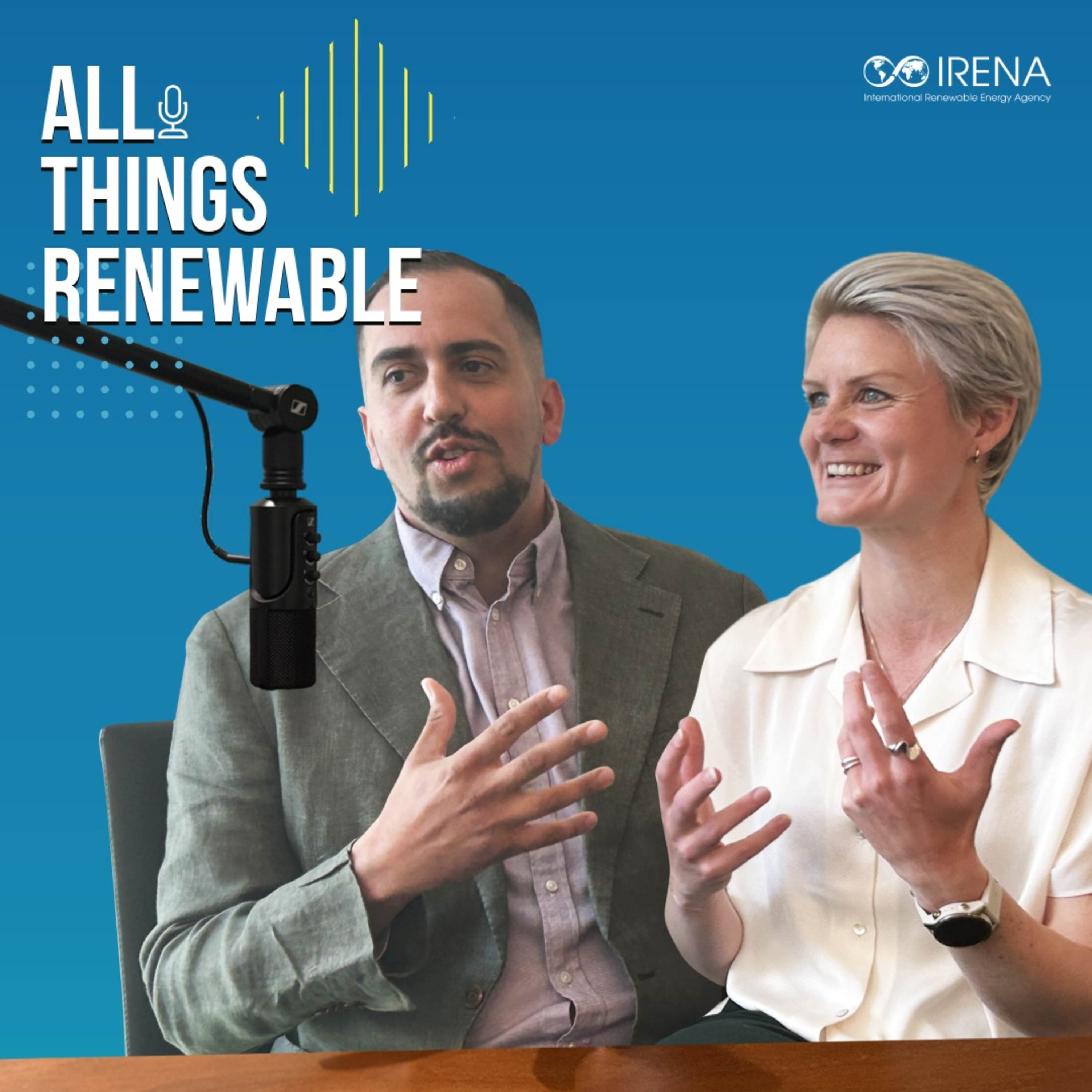
Harnessing the Winds: How to Unlock Full Potential of Offshore Wind Energy?
Offshore wind is emerging as a critical technology for the energy transition. With only 83GW of installed capacity today, it has vast untapped potential. In this episode, Simon Benmarraze, Head, Energy Planning and Modelling at IRENA, and Rikke Povlsen from the Global Offshore Wind Alliance (GOWA) explore the technical and commercial viability of GOWA's ambitious target of 2,000 gigawatts of offsh
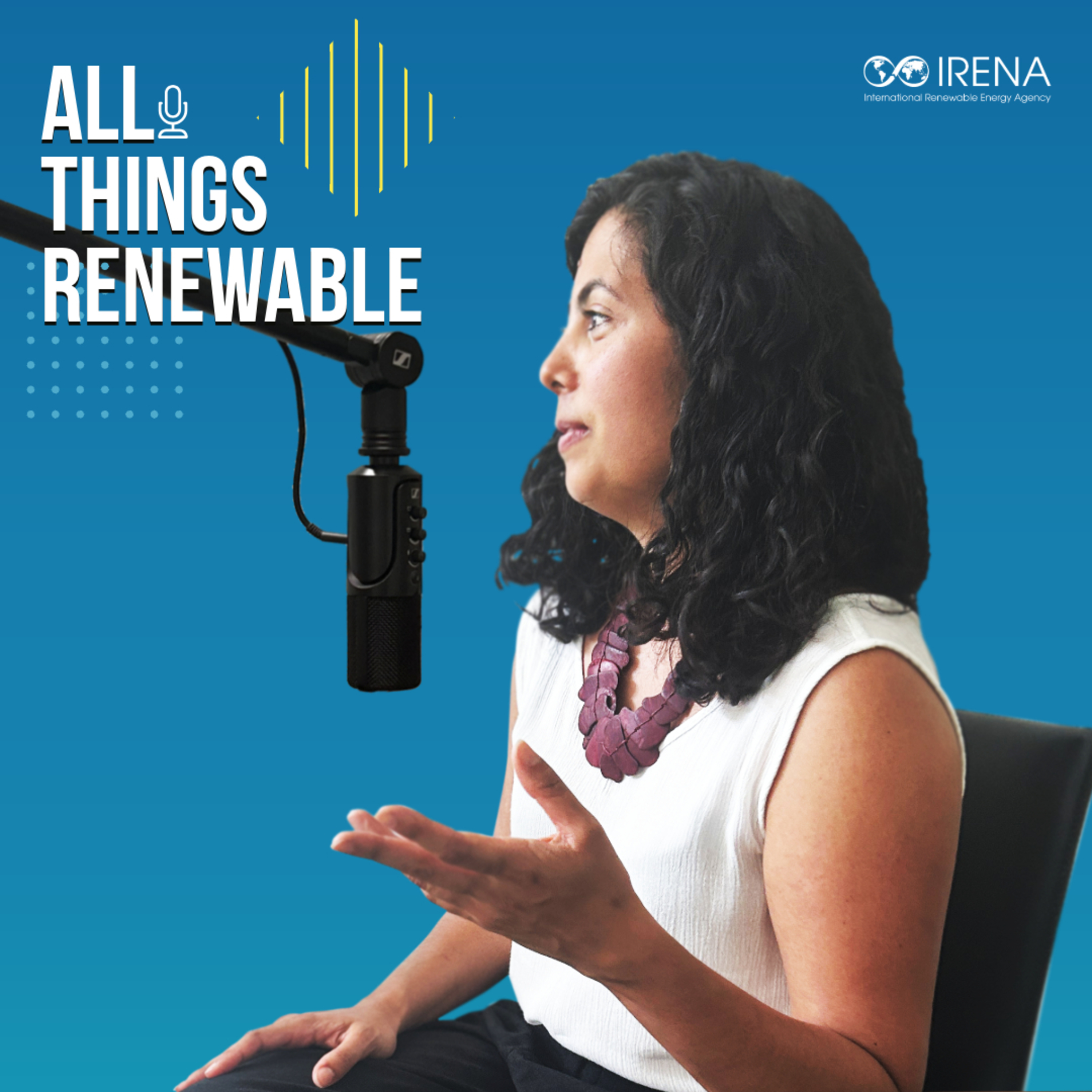
What’s Behind the 93% Drop in Battery Storage Costs?
Battery energy storage is essential for maximising the potential of renewables, and with costs falling 93% since 2010, it has shifted from a costly barrier to a key enabler of the energy transition. In this episode, Deborah Ayres, Renewable Energy Costs team at IRENA explores the drivers behind the cost reductions, policies needed to accelerate deployment and why affordable battery storage is esse
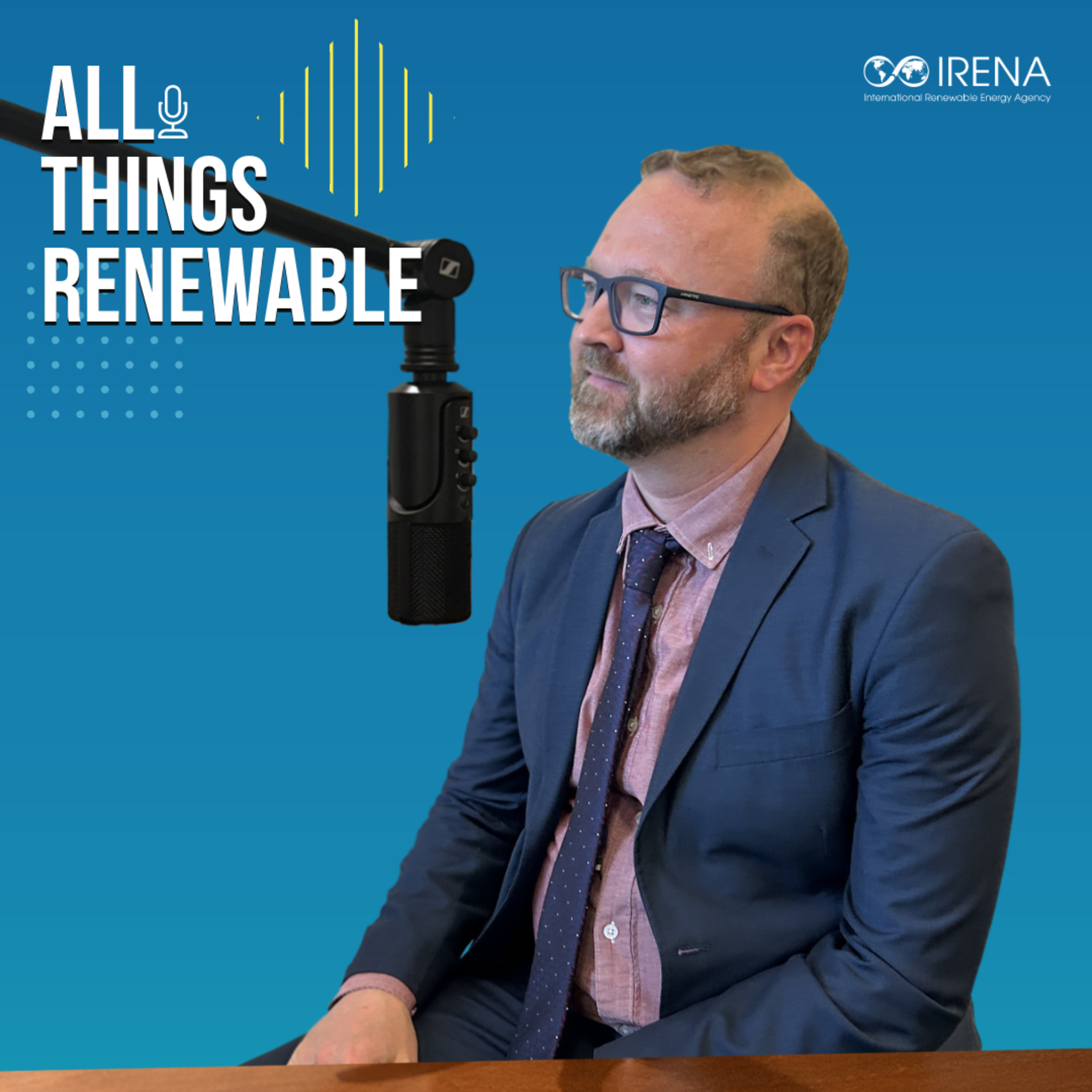
Decarbonising the Shipping and Aviation sectors: What are the best strategies?
Maritime shipping and aviation together represent over 5 % of global energy-related CO2 emissions, making decarbonisation of these sectors essential. While electric vehicles have revolutionised road transport, aviation and shipping face unique decarbonisation challenges from longer asset lifetimes, complex infrastructure needs, and fuel compatibility requirements. In this episode, IRENA's Arno van
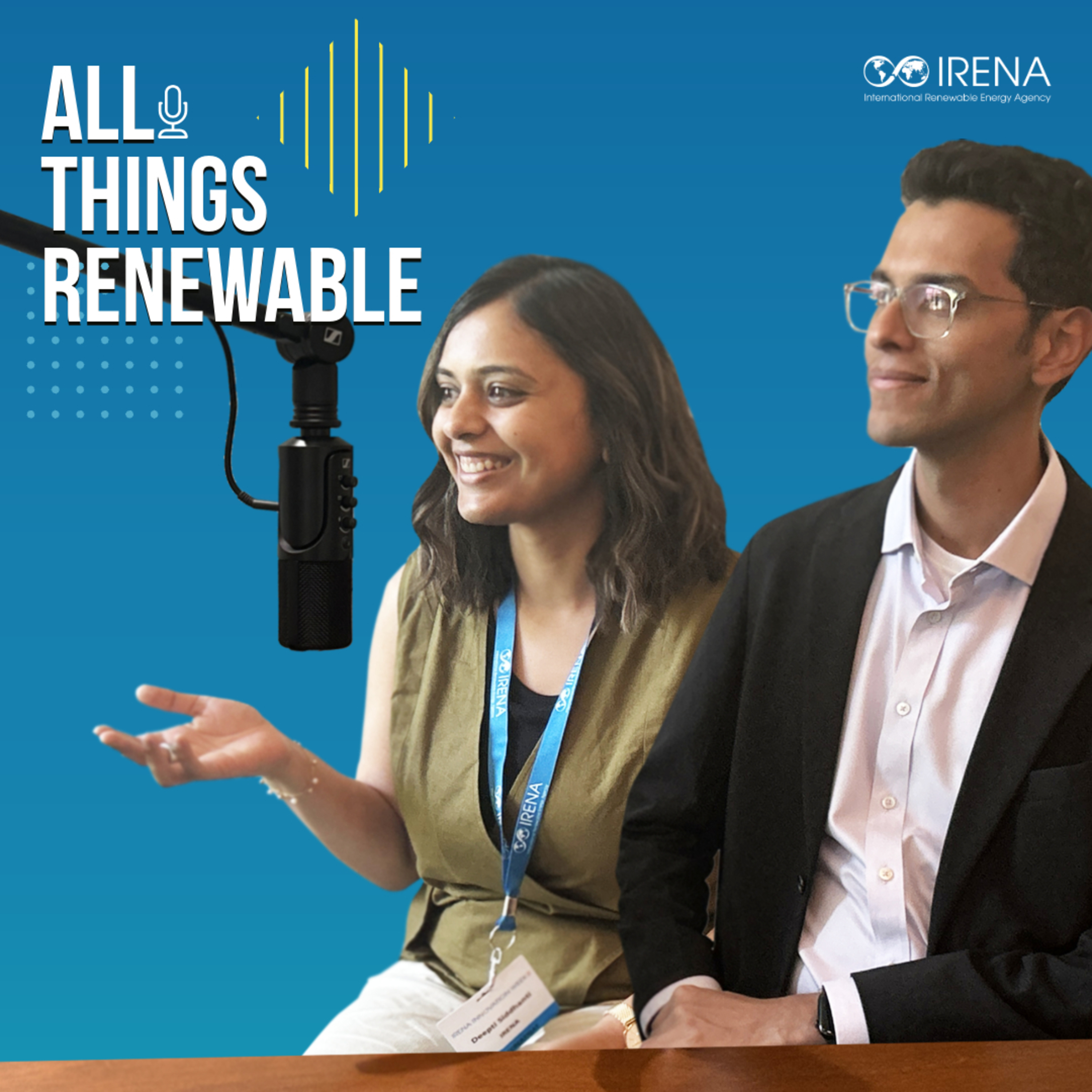
Steel to Shipping: How can we tackle emissions of the heavy industry?
Heavy industries such as shipping, aviation, steel and aluminium account for over a quarter of global carbon emissions, yet remain among the toughest sectors to decarbonise. From the high costs of switching production processes to scaling immature technologies, the challenges are immense. IRENA's Deepti Siddhanti and Karan Kochhar from the Innovation and End-Use team examine the systemic approache
Driving change: How to accelerate the electrification of road transport?
Road transport accounts for three-quarters of overall global transport emissions, making it a critical sector for decarbonisation. Whilst the ever-increasing amount of electric vehicles is a positive trend, the rising global demand for road transport services, especially in the developing economies, still translates into rising emissions. In this episode of All Things Renewable, host Daria Gazzol
What role can green hydrogen play in the energy transition?
Hydrogen has the potential to decarbonise heavy industry, aviation, and steel production, but significant hurdles remain. From the "chicken and egg" dilemma affecting investment decisions to bridging the cost gap with fossil-derived alternatives, the path to scale isn't simple. IRENA's James Walker, Team Lead - Renewable Gases and Francisco Gaffaro, Team Lead - Power Sector Transformation at IRENA
AI data centers and renewable energy: Can we power the digital surge sustainably?
Artificial intelligence is driving unprecedented data center expansion, with electricity demand projected to double by 2030. Can we meet this surging energy demand while maintaining the energy transition? In this episode, Adrian Gonzalez, Programme Officer - Innovation and End-use Sectors at IRENA, explores how a diversified renewable portfolio and smart grid solutions can power our AI-driven digi
Costs of power generation: Do renewables make business sense?
From solar and wind to geothermal and bioenergy, the costs of renewable technologies have dropped dramatically over the past decade, with solar leading the surge. In 2024 the costs of renewables have stabilised. Do renewables still make business sense? In this episode, Saied Dardour, IRENA's energy cost expert, breaks down the latest findings from IRENA’s Renewable Power Generation Costs in 2024 r
Power for all: Is the world on track for universal energy access by 2030?
In this episode, we take a closer look at the global progress toward Sustainable Development Goal 7 (SDG 7): ensuring access to affordable, reliable, sustainable, and modern energy for all by 2030. Today, 666 million people, mostly in the Global South, still remain without access to electricity.Ute Collier, Acting Director of Knowledge, Policy and Finance division at IRENA presents the latest data
The renewable energy boom: What is the story behind data?
2024 set a new record with 582 GW of renewables added. But is it enough—and who’s being left behind? IRENA’s data experts, Nazik Elhassan and Dennis Akande, unpack the global trends shaping our clean energy future and walk us through the numbers, the methodology, and the stories hidden in the data.This episode is for anyone who wants to understand the momentum, the gaps, and the global race to tri
Small scale, big impact: How can decentralized renewables transform lives and livelihoods?
Decentralised renewable energy solutions deliver electricity in remote and rural communities. But energy access is not only about powering homes, it is about empowering lives and livelihoods and unlocking full potential of the remote communities. In this episode, host Daria Gazzola is joined by Kavita Rai, Senior Programme Officer for Energy Access at IRENA, to explore how decentralized renewable
How can innovation in renewables drive sustainable development?
In this episode, Arina Anisie, IRENA innovation expert, talks to the host Daria Gazzola about how innovation in renewable energy goes beyond technological advancements, driving sustainable growth and development globally. This podcast was recorded on the last day of the IRENA Innovation Week, where participants discussed an array of topics from technology and systemic innovation to insights on how
Is energy transition possible without energy utilities advancing renewables and power grids?
Due to owning and operating much of the infrastructure, utilities play a key role in modernising the grid, making it more flexible and resilient to prepare for uptake of large scale solar and wind energy. In this episode, IRENA’s Programme Officer - Partnerships, Zafar Samadov, shares insights on why utilities are uniquely positioned to drive the shift to renewables, pinpointing the challenges the
How do we empower youth to shape a renewable energy future?
The youth of today are not just passive bystanders, they are changemakers. The voices of young generations have never been heard as clearly as they are today. In this episode, Riccardo Toxiri from IRENA joins host Daria Gazzola to discuss how youth bring urgency, innovation and bold ideas to the table, shaping energy policies, spearheading impactful initiatives, and gaining recognition on the inte
Small but Resilient: How the Energy Transition Benefits Island Communities
In this conversation with Arieta Gonelevu Rakai, IRENA expert on SIDS and Head of Partnerships, we explore the pressing issues facing Small Island Developing States (SIDS) in the wake of climate change and ways in which energy transition will positively benefit the island communities. With rising sea levels and increasing natural disasters, SIDS, which contribute less than 1% of global greenhouse

What is the role of policy in driving investment for a just energy transition?
Public funds alone cannot fund the energy transition, but they play a critical role in catalyzing private investment. In this episode, host Daria Gazzola speaks with Diala Hawila, Programme Officer, Policy Advice from IRENA about why only a fraction of global energy transition investment reaches developing economies. They discuss how policy frameworks and public financing mechanisms can catalyze p
Financing renewable energy projects: Why bankability matters?
Many developing economies cannot fund their energy transitions without significant international investment. Yet, to obtain funding, projects need to be bankable. In this episode, Erick Ruiz Araya, Deputy Director, Project Facilitation and Support at IRENA, explains why climate finance is critical for powering the energy transition in developing countries and why bankability matters. © IRENA 2025U
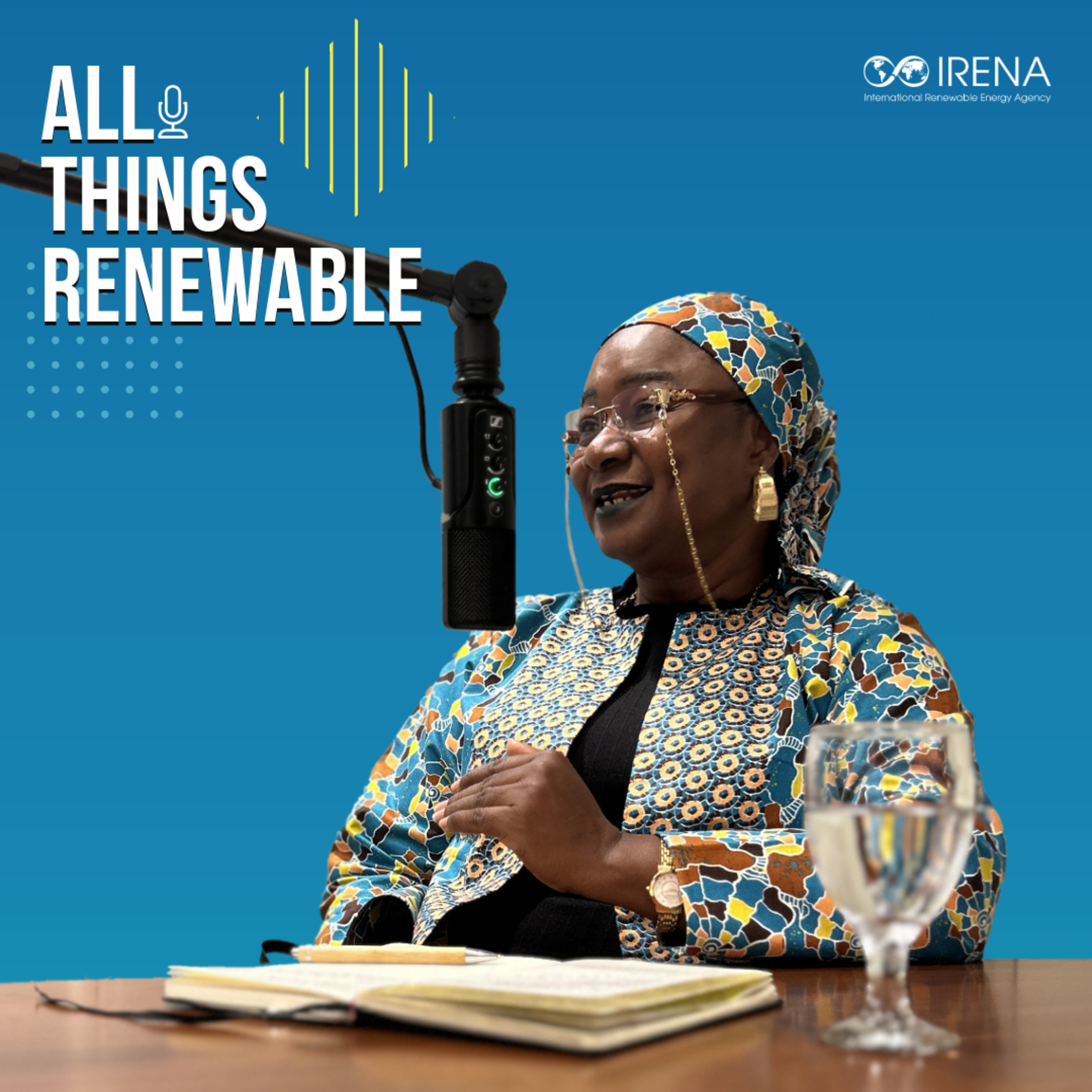
How can African countries drive the energy transition?
In this episode, we explore the key challenges and opportunities in Africa's energy transition, with a focus on the Accelerated Partnership for Renewables in Africa (APRA). How can partnerships like APRA unlock investment, drive implementation, and deliver local value?Safiatou Alzouma, IRENA’s Special Advisor on Energy Transition, Climate and Green Industrialisation, joins host Daria Gazzola
Small but Resilient: How the Energy Transition Benefits Island Communities
In this conversation with Arieta Gonelevu Rakai, IRENA expert on SIDS and Head of Partnerships, we delve into the pressing issues facing Small Island Developing States (SIDS) in the wake of climate change and ways in which energy transition will positively benefit the island communities. With rising sea levels and increasing natural disasters, SIDS, which contribute less than 1% of global greenhou